Categories
Tech

Google Calendar To Shut Down SMS Notifications

For many of us, Google Calendar is now part of our daily lives. Google Calendar is that small, easy-to-use accessory, and an almost indispensable application for those who work with Android. The integrations are designed for this, optimized and in fact, trying to think of using anything else except in particular cases. Now, Google Calendar is about to shut down SMS notifications, a feature used by many users.

Google Calendar has recently even acquired a small amount of empowerment, with planning functionality and the ability to manage automatic responses. Enough to make it a little more than just a digital calendar. But, the tool will also undergo a radical evolution in the coming months.

Indeed, as of January 7th, 2019, Google Calendar abandoned a feature that was supposed to be the most popular with many users. On that date, Google Calendar will no longer be able to send SMS messages automatically.

Google Calendar To Shut Down SMS Notifications About The In-App Events You Set

Google Calendar application simply intends to rely exclusively on its own notifications. That is how you will be able to receive your alerts regardless of your device. Google itself released this information in an official blog post. If you are one of those affected, you will receive a notification from Google, reportedly.

If you have already received Google Calendar notifications by SMS, they will be replaced by notifications via the application and by email. You will see these notifications as follows:

  • Event notifications in a web browser where Google Calendar is running or on a mobile device if you have the Google Calendar application for Android or iOS;
  • Via email, if you had configured SMS notifications for new events, modified events, canceled events, or event responses;

However, it can be assumed that this should only concern a few Google Calendar users, as notifications are much more practical.

Categories
Tech

Xiaomi Plans To Launch An E-Reader To Compete With Amazon Kindle

Xiaomi could be creating its own E-Reader, a device to enter the market of electronic books where Amazon now rules with indisputable sovereignty. Given the level of diversification that has the firm regarding products, this would not be a surprising decision, but very interesting considering the current panorama of these terminals.

It’s not the first time we’ve heard about a Kindle made by Xiaomi, as rumors about it began to circulate last year. However, sources close to the company pointed out that this device was too trivial back then, as the company was focusing on making products for the smart home concept.

However, the roadmap of Xiaomi seems to have recently gone through a mass e-book again, and now Li Chuangqi, Xiaomi’s Product Manager, has put the spotlight on it again. Asked by a user on China’s Weibo social network who was requesting Xiaomi’s reasons for not making a gadget like the Kindle, the manager replied with a cryptic “wait.”

Xiaomi Plans To Launch An E-Reader To Compete With Amazon Kindle

Currently, the E-Readers scene is composed of just a handful of brands that decide to bet on this technology, with proposals such as Kobo, BQ or Tagus, which are trying to succeed in a sector increasingly dominated by the Amazon Kindle.

Also, the new Paperwhite makes it easy to understand how simplicity and a clear product push the firm of Jeff Bezos to the top in the E-Readers market. However, if there is a company dedicated to making affordable, but reliable gadgets, that is Xiaomi.

So, although there is no information about what this possible future Xiaomi E-Reader device could look like or when it could reach the market, there is a reason for the fans to expect it really soon. Maybe Xiaomi is the only one that can threaten the Amazon’s reign in a segment where the competition refuses to go for it.

Categories
Tech

Samsung Galaxy A8 Would Ditch The Notch With A Selfies Camera Under The Screen

The Samsung Galaxy A8  will be Samsung’s first smartphone with a selfies camera under the screen and the prelude to what is supposed to be the 2019’s Samsung Galaxy S10. Weeks ago the company already announced the A8 handset in a presentation event aimed at launching new technologies. Unfortunately, they did not reveal many details on the new smartphone. Thanks to several renders based on the different Samsung Galaxy A8 leaks, we now know its design.

Although 2018 has not been the best year for the South Korean company, it looks like 2019 will start with a series of significant launches of new and improved smartphones. The Galaxy A8 will be the first of all, and as the company itself announced a few weeks ago, it will be the first smartphone in the world to integrate a camera under the screen.

That is visible in the different renders published by a renowned German website, specialized in leaks. In the images available below, we can see a handset with a virtually frameless design, and with a camera placed under the screen. The sensor in question would be located to the left of the terminal and would have a much smaller size than the current smartphones which boast a notch.

Samsung Galaxy A8 Would Boast A Selfies Camera Under The Screen

Otherwise, the device stands out for having three cameras on its back. We could already see something like this in the Samsung Galaxy A7, so it wouldn’t be unreasonable to think that Samsung will repeat the same configuration on its top-of-the-range mid-range Galaxy A8.

As for the rest of the technical specifications, the features are still a mystery, but everything points to a Snapdragon 710 processor, 6 GB RAM and 128 GB of internal storage, expandable by microSD cards up to 256 GB.

The last highlight of Samsung’s mid-range is the inclusion of a fingerprint sensor on the back of the phone. Some rumors claimed that Galaxy A8 would come with an in-display fingerprint sensor. It looks like it won’t, and we’ll have to wait until the Samsung Galaxy S10 to see this feature.

Categories
Crypto News

Canadian Crypto Miner Came Up With A Heating System Based On Bitcoin (BTC) Mining Rigs

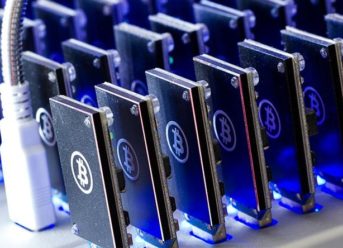
A crypto miner in Canada created a prototype heating system for his home using heat released from ASIC mining equipment. The Canadian miner announced that, on November 18th, through the social network Twitter. The heating system runs continuously and is capable of extracting excess heat within the 6,000 square-ft house. The prototype takes advantage of the heat produced by 6 Antminer S9 miners, while they mine Bitcoin (BTC).

Twitter user Jonbros01 shared photos and features of his prototype in a conversation thread with Bitcoiner Francis Pouliot, who initially broke the news that in Quebec, Canada, similar prototypes are being used to heat homes in winter. Pouliot added that he himself, in 2014, was heating his apartment with excess energy created by Bitcoin (BTC) mining equipment.

He added that, during the summer, the heat produced by the mining equipment is sent by the prototype to the outside of the house automatically. “The heat is automatically sent out… Nothing to do, the air intake is adjusted, and unwanted heat is extracted dynamically,” he explained to a Twitter user.

Canadian Crypto Miner Came Up With A Heating System Based On Bitcoin (BTC) Mining Rigs

The Canadian miner said he has no problems with bad smells or noise. “Noise was a big focus point when we designed the system. It doesn’t make more noise than an inherited system. You don’t hear anything in the rooms. My son sleeps in the next room, and he doesn’t hear anything. According to the Canadian miner, it is so quiet that there is no suspicion that the house is being heated by crypto miners.

“The miners are always kept at the perfect operating temperature during the winter, and during the summer only the fresh air from outside is getting into the miners, while the hot air is immediately drawn out because we don’t want heat for the miners,” he said.

The Canadian crypto miner pointed out that his prototype does not require a ventilation system. “No need to cool the miner unless the outside temperature is above 35 degrees Celsius. But for the warmer area we already have a solution that works,” he said.

“Once Ebang E11 ++ is available we will make the required modification to adjust to the size difference. Then I’ll probably start marketing it,” he said. It should be noted that Ebang is a Chinese manufacturer of Bitcoin (BTC) miners, which in late September announced the launch of a new generation of more energy-efficient equipment.

Categories
Crypto News

Crypto Exchanges Enabled Deposits and Withdrawals Of BCHSV, But Only Under Specific Conditions

Several renowned crypto exchanges have enabled their deposit and withdrawal operations with Bitcoin Cash Satoshi Vision (BCHSV). However, they have either imposed conditions or made clarifications about the convenience of this investment, primarily because of the characteristics of the blockchain and the conflict from which it derives.

In this regard, the Kraken exchange stated that Bitcoin SV did not meet the usual requirements to be listed in Kraken and stressed that it is an “extremely high-risk investment.” This asset does not have known wallets that provide repeat protection nor does it have support in the principal ecosystem blockchain explorers.

“No wonder – The responsible exchange platforms do not look kindly on clowns who oppose the protection of repetition, announce the intention to defraud these platforms, and try to launch deep reorganization attacks,” said Emin Gur Sirer on Twitter.

A significant element is that the Kraken exchange platform has made it clear that the losses generated by nChain’s harmful intervention will be socialized among Bitcoin Cash Satoshi Vision (BCHSV) holders.

Crypto Exchanges Enabled Deposits and Withdrawals Of BCHSV, But Only Under Specific Conditions

“Losses of custody assumed due to attacks originating from nChain or its affiliates will be socialized among all BSV holders in Kraken. Given the volatile state of the network and the threats that have been made, Kraken cannot guarantee perfect custody of BSV,” stated Kraken.

For its part, Bittrex qualified Bitcoin SV as a contentious fork, in a statement issued before the fork. The exchange warned that deposits sent erroneously between addresses of these currencies would not be refunded under any circumstances.

“Bittrex will make all reasonable attempts to credit our users with BSV chain division tokens. We will not recover deposits made incorrectly between strings under any circumstances due to lack of repeat protection,” reads the document.

Other crypto exchanges like Binance or OKEx have activated their trade of Bitcoin SV without major protocols, although the withdrawal and deposit of BCH were stopped as a preventive measure before the hard fork. Poloniex, for its part, removed the symbol “BCH” and listed BCHABC and BCHSV, although deposits and withdrawals will be activated once the network stabilizes. Bitfinex also opened its markets for the currencies generated after the fork, using the BAB and BSV tickers.

Exit mobile version