Categories
Tech

Google Pixel 3 XL Teardown Revealed Samsung Display And The New Google Titan M Security Chip

Experts at iFixIt ripped open the new Google Pixel 3 XL and discovered many new additions in comparison with the previous model, the Pixel 2 XL. Accordingly, the new Google flagship smartphone boasts the Google Titan M Security chip and the all-new Samsung AMOLED panel which displays brighter and more saturated colors than the last year’s Pixel 2 and Pixel 2 XL.

Besides, according to iFixIt, the new Google Pixel 3 XL construction presents massive amounts of glue, particularly for the rear glass panel, which makes it difficult to repair. In fact, the iFixIt experts even broke some of the smartphone’s components in the process, including the earphone and a ribbon cable underneath the battery. Because of all that, iFixIt gave Pixel 3 XL a repairability score of 4 out of 10.

While Google Pixel 3 XL boasts many new additions under the hood, some of the components are the same used on Google Pixel 2 and Pixel 2 XL, as well as on other smartphone models of other manufacturers.

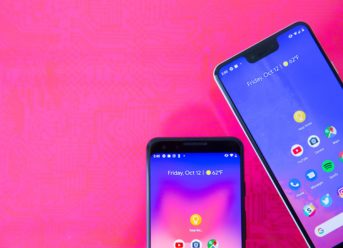
Google Pixel 3 XL Teardown Revealed Samsung Display And The New Google Titan M Security Chip

As we’ve already pointed out, Google Pixel 3 XL teardown put up by iFixIt reveals that the new smartphone model boasts a Samsung AMOLED display and the new Google Titan M Security chip.

Besides these additions, Pixel 3 XL presents the same Google SR3HX “Pixel Visual Core” chip as the last year’s model. Also, regarding the phone’s camera, it seems that indeed Google mounted the standard Sony camera sensor, IMX363, in this case, which is usually used by other manufacturers on their devices.

Accordingly, all the new camera functionalities and improvements are only software-based and not hardware, as we would’ve expected. Definitely, Google Pixel 3 XL takes excellent pictures, but only thanks to the Google camera AI implemented on the new flagship smartphone. You can check out the full Google Pixel 3 XL teardown by iFixIt, below.

Categories
Crypto News

BTCC Crypto Exchange, the First Bitcoin (BTC) Exchange In China, Plans to Relaunch in South Korea

China’s first Bitcoin (BTC) exchange, BTCC, formerly known as BTC China, is ready to launch new trading services in South Korea, as The Investor reported yesterday, October 16th. BTCC, currently based in Hong Kong, will begin marketing its facilities in South Korea later this month via a Beta phase, while it would make its official debut in November.

According to BTCC’s website, the South Korean service, headed by Lee Jae-Beom, would comprise a new crypto exchange platform, a wallet service, a mining fund, and a service to enable consumer payments.

“BTCC is establishing an online/offline payment system using cryptocurrencies, and is expanding services for use in real life,” BTCC stated.

BTC China (BTCC) established in 2011 and was previously one of China’s top-three crypto exchange platforms, before intensified pressure from the country’s regulators and central bank, amid signs of imminent crypto repression, forcing BTCC to announce its closure in September 2017, while China’s national regulatory banned Initial Coin Offerings (ICOs) at the same time.

BTCC Crypto Exchange, the First Bitcoin (BTC) Exchange In China, Plans to Relaunch in South Korea in November

In January of this year, however, the company was acquired by a Hong Kong-based blockchain investment fund. Subsequently, a new BTCC project continued to develop with improvements on its mining pool and its Mobi software crypto wallet, that before relaunching its trading platform in July.

Crypto exchange platforms in South Korea have also come under considerable scrutiny by national watchdogs, which have intensified markedly in the wake of high-profile checkpoints and allegations of fraud. This year, however, China has been working to reclassify the exchanges as “crypto assets and brokerage exchanges,” thereby “recognizing them as regulated financial institutions.”

A decision is expected to be announced next month following officials’ deliberation on the possible repeal of South Korea’s ban on ICOs, which has also been in effect since September 2017. At the time of going to press, BTCC is recording about $170,000 in daily trading volumes.

Categories
Tech

Google Chrome 70 Launched With New Features And Privacy Improvements

There is a new update available for Google Chrome. That is Google Chrome 70, and it is a version that is already available for the essential compatible operating systems, such as Windows, MacOS, and Linux, besides Android and iOS. The new version of Chrome presents critical improvements, including the new privacy options to manage extensions better.

That is a change that has a lot to do with the recent cyber attacks that have occurred in applications or extensions of third parties and have endangered the privacy of Google Chrome users. Now, Google is setting the goal to prevent such risky situations. With the new Google Chrome 70 version, we will have the opportunity to manage in a more detailed and individualized way the extensions that we install within the browser. Also, we can now granted or deny some of the extensions’ access to our data.

Another important, though controversial, feature in Google Chrome 70 is the automatic sign-in disabling. Users have repeatedly complained that when accessing Google’s services, such as Gmail, for example, they logged into the browser directly and synchronized the data. Users don’t think this is convenient, because no authorization is requested from the user.

Google Chrome 70 launches with new features and privacy improvements

Other relevant novelties come on board this new Google Chrome 70 version. One of the most important is the possibility of installing web applications for Windows users.

In that way, we will be able to use web applications as if they were native Chrome apps. These programs will appear as if they were directly accessed on the computers, so we can access them much more easily.

Google Chrome 70 also supports fingerprint verification for macOS, iOS, and Android. Owners of MacBook Pro devices, which have TouchID, will now be able to log on to computers using the fingerprint reader. The same goes for users of the mobile version of Google Chrome 70 for Android.

Categories
Tech

Apple ID Holders Across China Exposed to a “Phishing” Hack – Two-Factor Authentication Recommended By Apple

A new case of “phishing” in China reminds us how important it is to opt for two-factor authentication to protect our Apple user ID, especially if we have linked a credit or debit card to it. A week ago, two Chinese online payment giants, namely, Alipay and WeChat, reported that their customers whose Apple IDs were linked to the before-mentioned company’s accounts had been hacked. The e-stores noticed misuse of the Apple users’ electronic wallets.

According to The Wall Street Journal, the Apple company has now sent a message apologizing sincerely for the situation. However, they also confirmed that the problem has occurred outside the Cupertino-based company, and has been limited to a massive case of “phishing,” an email scam in which the cyberattackers send a message that looks like coming from Apple but, in reality, is not Apple.

Apple recommend two-factor authentication after the recent “phishing” attacks of Apple ID across China

According to this “phishing” email, the Apple ID user is urged to connect to a page that looks like Apple’s official site, but, once again, is not Apple’s. When Apple users connect to that fake website and enter their Apple ID account and password, they are giving their credentials to hackers who use them as they want.

“We apologize sincerely for the inconvenience caused to customers affected by these phishing scams,” Apple stated.

Apparently, the hacked Apple customers had not configured two-factor authentication, which would have prevented hackers from accessing their Apple ID. However, as reported, the issue only affected Apple users across China.

Apple has not confirmed how many of its clients have been affected, nor what money amounts have been stolen. Also, the Cupertino-based company did not offer details on how cyberattackers obtained the list of the Apple IDs across China to send “phishing” emails to them. However, Apple recommended users worldwide to adopt two-factor authentication.

Categories
Tech

Microsoft Surface Pro 6 Is The Best Substitute For Laptops

Microsoft now means more than just Windows OS. Unlike ten years ago, today, the giant tech company also represent top-of-the-line hardware, of which Microsoft Surface Pro is the leading device. Surface Pro has not had much serious competition in recent years, so if you want a tablet that would also be a replacement for your laptop, there aren’t many other good options. Besides iPad Pro, none of the competitors represent a severe threat to the Microsoft Surface Pro dominance. Now, Microsoft announced the Surface Pro 6 which now comes with a quad-core processor.

The Microsoft Surface Pro 6 is an elegant and refined gadget, boasting a similar design to that of the previous models, but improved. The chassis is robust and distinctive and has everything that we could expect from a premium version of this device. Microsoft has even developed an aesthetic that is unique in comparison with both Apple and the rest of tablets.

But the truth is that the giant tech company did not bring much new design improvement compared to the previous Surface gadgets. It’s neither thicker, nor thinner than older Surface Pros.

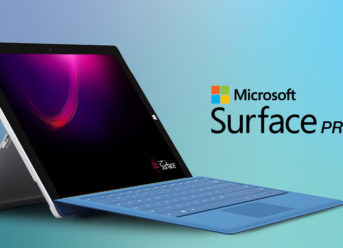
Microsoft Surface Pro 6 is the fiercest competitor for modern laptops

Microsoft Surface Pro 6 is designed to be a real laptop replacement and, according to its under the hood specs, it is indeed competing with the most recently released laptops. The basic version of the new Microsoft Surface Pro 6 boasts an Intel CPU of the 8th generation, which is a significant upgrade to the Surface Pro 2017, particularly in the multitasking capabilities.

As good as the Core i5-8250U processor is, the downside of the new Microsoft Surface Pro 6 is that the manufacturer did not opt for the latest Intel CPU. The Kaby Lake-R processor, the new tablet-PC packs, is almost 1-year-old and lacks some of the features boasted by the new Intel CPU.

Regarding internal storage, the new Microsoft Surface Pro 6 comes with SSD PCIe NVMe Hynix with a write speed of over 1,000 megabytes per second, which is twice the speed of the SATA SSDs used in the Asus NovaGo or HP Envy x2, for example. However, it was a bit slower than the Samsung SSD that was used in last year’s model.

Exit mobile version