Categories
Crypto News

Lightning Network Has More Public Nodes Than Ripple, Litecoin (LTC), and Bitcoin Cash (BCH) Blockchains

The adoption of Lightning Network, the Bitcoin (BTC) network of fast payment channels, is growing exponentially this year. Now, Lightning Network has more public nodes than Ripple, Bitcoin Cash (BCH) and Litecoin (LTC), taken separately. At the end of August, a Twitter user reviewed how Lightning Network has more public nodes than Litecoin (LTC), Ripple (XRP) and Bitcoin Cash (BCH) blockchains altogether. The tweet sparked controversy, as the user gave no proof of this claim.

Lightning Network surpassed Ripple, Litecoin (LTC) and Bitcoin Cash (BCH) blockchains regarding public nodes

However, a recent investigation shows that the user’s assertion was not entirely true as the Lightning Network has more public nodes than Litecoin (LTC), Ripple, and Bitcoin Cash (BCH) networks, but only if we take them separately and compare them with Bitcoin (BTC)’s Lightning Network.

While in the Litecoin, Ripple and Bitcoin Cash blockchains it is free to run a network node, in Lightning Network (LN), on the other hand, each node involves a minimum electrical expense and some Satoshis that are blocked as a guarantee for creating channels. Despite this, the public nodes of LN in Bitcoin (BTC) amount to 2522 (with a 10% increase in the last 30 days), according to statistics of 1ML.

The number of public nodes of Litecoin (LTC) is 261, while Ripple has 789. On the other hand, Bitcoin Cash (BCH) network is closer to LN with 2124.

Although these numbers are quite encouraging, it is difficult to determine precisely how many Lightning Network nodes currently exist

According to an article published recently, the number of nodes shown in the latest Lightning Network’s graphs could be wrong, due to several factors. The first of these is the node view as a node generates its network graph, which may be limited, but still uses it in its function. Therefore, it is possible that a node does not offer a view of the whole network.

Similarly, it is currently recommended that wallets execute their nodes privately. Thus these private nodes are not visible to the network graph and are not calculated in the statistics.

Lightning Network, which already has its first physical node available on the market, currently has about 12,000 channels, according to the 1ML report. The network capacity is now at 116.50 BTC or about $756,000 according to the current price of Bitcoin (BTC).

Categories
Tech

Microsoft Office 365 Now Packs The New Anti-Malware Scan Interface To Protect Users Against Malicious Macros

Microsoft has announced that Office 365 applications now support Anti-Malware Scan Interface (AMSI), a solution that allows antivirus programs to block malicious macros which have been a significant threat to users of any of the programs in Microsoft Office suite.

Microsoft Office 365 packs the new Anti-Malware Scan Interface to allow antivirus programs scan macros and scripts

A macro is a series of rules or instructions that are grouped under the same command to complete a task automatically. For example, you can create a macro to change the formatting of a text document or to print all the documents in a folder automatically.

While they can be handy for automating actions and saving time, they can also be very dangerous, as cyber attackers can use macros to inject malicious codes and install malware on victims’ computers.

Now, Microsoft has finally decided to take action and to protect its customers. Accordingly, the Microsoft Office 365 client applications are now integrated with the new Anti-Malware Scan Interface (AMSI) which permits antivirus programs and other IT security solutions to scan macros and other scripts to detect and block malicious macros or other threats they find.

Latest Microsoft Office 365 updates already came out with the new Anti-Malware Scan Interface

From now on, when a macro invokes a high-risk function or method, Microsoft Office 365, via the Anti-Malware Scan Interface (AMSI), will stop its execution and request an analysis of the macro’s behavior. The antivirus software then performs the scan and points out whether it is indeed a malicious behavior or not.

If the antivirus indicates that the behavior is malicious, it will stop the macro from running, inform the user of the problem, and close the session to avoid further damage.

The Anti-Malware Scan Interface has already been integrated into the latest Microsoft Office 365 updates, but it will not work if the user has activated the “Enable all macros” security option.

Categories
News Tech

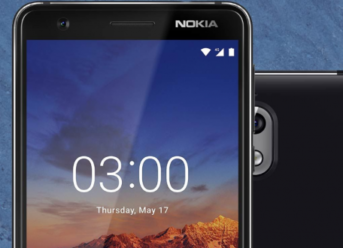
Nokia 3.1 To Receive Android 8.1 Oreo Update

The Nokia 3.1 is one of the few Android One smartphones from HMD Global that come with Android 8.0 Oreo, but its manufacturer has set out to release Android 8.1 Oreo updates soon.

Just in case you need a little review, this Nokia 3.1 boasts a 5.2-inch HD screen, protected by Corning Gorilla Glass, and comes with a relatively simple design, with curved edges and delicate lines. Under the hood, as you probably already know, Nokia 3.1 runs a Mediatek MT6750N processor with eight cores, which is accompanied by 2 GB RAM and 16 GB of storage (expandable via microSD) in its most basic version.

There is, however, a superior variant with 32 GB and 3 GB of RAM.

As for the cameras, Nokia 3.1 mounts a primary sensor with 13-megapixel resolution and a lens with f/2.0 aperture, while its selfies camera boast an 8-megapixel sensor with a wide-angle lens and f/2.0 aperture. Also, its battery is a 2,990 mAh one, and it comes at very affordable prices.

Nokia 3.1 to get Android 8.1 Oreo updates soon

The first signs of a possible Android 8.1 Oreo update for Nokia 3.1 came from India where some users have started to notify that a package has arrived on their Nokia 3.1 phones helping them make the expected leap to Android 8.1.

The file, dubbed as Version 2.56B, weighs no less than 1.12 GB and comes with changes related to the settings menu, which has been renewed in Android 8.1 version in comparison to the previous one, a battery percentage indicator for the Bluetooth devices connected with the smartphone and a shutdown/restart menu that has also came up with a different appearance.

The same update also includes all the security patches up to this month.

Both Nokia 3.1 and Nokia 5.1 stood out as the only Nokia devices announced this year that ran Android 8.0. As both before-mentioned devices came with MediaTek chipsets, some users were not pleased, but now, at least, they would enjoy a superior version of the Google’s OS, the Android 8.1 Oreo.

Categories
Crypto News

Sberbank and The Bank of Russia Ensured Successful Conclusion of an Experimental ICO

The experimental regulatory platform set up by the Central Bank of Russia has completed an Initial Currency Offer (ICO) sponsored by Sberbank, according to some inside sources. Ivan Semagin, director of Financial Market Development at the Central Bank of Russia, revealed to the news agency TASS that, despite having met the goals of the ICO in the technical sense, there were some obstacles from the legal point of view, which he did not detail.

Sberbank was the primary investor in the recently concluded ICO

The experimental ICO was announced in April of this year and carried out together with Sberbank, Russia’s leading retail bank, and Russia’s National Liquidation Depositary. The initiative aims to encourage the country’s financial players to experiment with such a business model.

The issuing company of the ICO in question was Level One, a commercial promotion website, while the principal investor was the corporate arm of Sberbank, Sberbank CIB, and the NSD was the custodian of the operation.

Sberbank is very interested in crypto coins and announced in January of this year that it plans to open a cryptocurrency exchange for institutional investors through its subsidiary in Switzerland.

ICOs are a promising business model, while cryptocurrency is a “harmful scheme”

The announcement of the successful conclusion of the ICO was made during the Eastern Economic Forum (EEF), held in Vladivostok, which is an event held annually to strengthen alliances between Eastern Russia and the Asia-Pacific region. Both Russian and Chinese officials, as well as various media and journalists, were present at the event.

Alexey Chekinkov, CEO of the Development Fund for the Far East and Baikal Region, stated that ICO can bring monetary prosperity as a business model but, on the other hand, he deemed Bitcoin (BTC) or cryptocurrency, in general, is “a harmful scheme that wastes a lot of electricity in vain.”

Categories
Crypto News

Canadian City Affected By Ransomware Attack To Pay The Hackers To Regain Access To Computer Systems

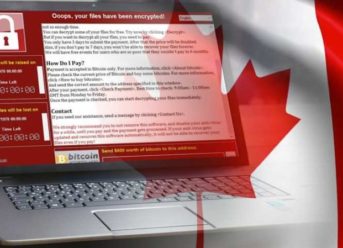
The Canadian city of Midland, in Ontario, has suffered a ransomware attack on its computer systems earlier this month, which has left all the city’s documents encrypted. Now, the city’s officials decided to pay the ransom in Bitcoin (BTC).

According to a press release published by the Midland People’s Council, the authorities, together with a group of cybersecurity experts, are carrying out the payment in Bitcoin (BTC) to the group of cybercriminals to get back the control over the town’s computer systems.

The press release doesn’t specify how much Bitcoin (BTC) the authorities of Midland will pay. However, the officials affirm that the city has an insurance policy that is created explicitly for this kind of situations.

“Under the guidance of cybersecurity experts, we have begun the process of paying the ransom in exchange for the decryption keys. Although not ideal, it is in our best interest to get the system back online as quickly as possible. The people had previously secured an insurance policy to cover such circumstances. Deciphering efforts are underway,” state the Midland Town Council.

Canadian city affected by a ransomware attack decided to pay the cybercriminals in Bitcoin (BTC)

The ransomware attack occurred on September 1st at 2 AM and took over the computer systems throughout the city of Midland, in Ontario, for 48 hours. Then, the majority of the administrative services became limited, even though the hackers did not affect critical systems such as waste management and fire response services, which could have endangered human lives.

Similarly, authorities say that this ransomware attack demanding for Bitcoin (BTC) took them by surprise as they were just planning to implement infrastructure changes to improve their systems’ security by the end of 2018. However, thanks to this unfortunate experience, informational security become a priority for the officials of the Canadian city of Midland, in Ontario.

The ransomware attacks are becoming increasingly popular in the world, as according to a study by Sophos, a British IT security firm, the creators of SamSam ransomware managed to raise $6 million from ransomware attacks. Also, one of the most potent ransomware of 2017, WannaCry, generated multimillion-dollar losses across Europe.

Exit mobile version