Categories
Tech

Google Inbox To Be Shut Down In March 2019

Google is expected to announce the discontinuance of its Inbox app starting with March 2019. That might seem like an expected decision by some of the app’s users, but it will soon be official. The Google Inbox, which launched in October 2014, was meant to revolutionize users mailbox by offering more modern features but served its purposes and now there is no more interest in it from Google.

Google Inbox was not meant to replace Gmail

The app’s primary objective was to facilitate the organization and the daily use of emails. As soon as it was launched, Google Inbox automatically labeled emails in different categories such as news, finance, travel, purchases, social networks, and so on. It was also possible to postpone an email until later, to deal with it at a more appropriate time.

Other notable features of Google Inbox include quick replies and easy access to email content, whether it is media or essential information such as a link to track a delivery or a restaurant’s phone number.

Google immediately stated that its Inbox app’s objective was not to replace Gmail app, even though Google raised some concerns when its Google Inbox was launched, leaving many users speculating about Google’s strategy in this regard.

Google Inbox to be discontinued in March 2019

In reality, Google Inbox has served as a test environment for the Google developers, who were able to measure the attractiveness of the new features without disrupting the regular use and users experience of its Gmail app.

Google Gmail app now boasts the best features of Inbox, so there is no more interest in Google Inbox app.

According to a recent Fast Company report, Google would soon announce the discontinuance of its Google Inbox starting with March 2019. A decision that comes as a logical next step since Google launched the new, modern Gmail interface.

Categories
Games News

Nintendo Switch Online Will Launch Next Week Along With A Bonus of Classic NES Games For Subscribers

Nintendo Switch Online, the paid service on which the company has been working since before the console even reached the stores, is now around the corner as it will roll out next week. According to Nintendo America, the new Nintendo Switch Online service will launch on September 18th. The new service’s launch is expected to be announced today at a new Nintendo Direct event.

According to the information disclosed by the company, the Nintendo Switch Online would come out with a free trial period of seven days, after which it will be necessary to pay for a subscription plan to keep on using the service.

Nintendo Switch Online would offer three subscription plans as follows:

  • 1 month – $3.99;
  • 3 months – $7.99;
  • 1 year – $19.99;

Besides, there will also be a family subscription plan with a limit of 8 different Nintendo accounts and a price of $34.99 per year.

Nintendo Switch Online will come out next week with cloud backup and a welcome pack of classic NES games

“The vast majority of Nintendo Switch games will support cloud backup. However, in certain games, this function would allow, for example, to recover objects that had been exchanged with other players, or to recover an online classification that had been lost. To ensure fair play, cloud backup should not be activated in such games. To ensure that cloud backups cannot be used to unfairly affect online multiplayer classifications, the feature will not be enabled in Splatoon 2,” explained Nintendo.

Besides Splatoon 2, however, titles like Dark Souls Remastered, Dead Cells, FIFA 19 or NBA 2K19, wouldn’t support cloud backup, either.

Nintendo is also preparing a welcome pack of classic NES games, the main novelty of which is that they will have online features. These include Soccer, Tennis, Donkey Kong, Mario Bros., Super Mario Bros., Balloon Fight, Ice Climber, Dr. Mario, The Legend of Zelda, Super Mario Bros.

However, Nintendo announced its intentions to release new titles occasionally, as these games will be available free of charge but only for Nintendo Switch Online subscribers.

Categories
Games News

Electronic Arts Could Be Criminally Prosecuted For Loot Boxes In FIFA 18 And FIFA 19 In Belgium

The Belgian Attorney General is currently conducting a criminal investigation into Electronic Arts (EA). The video game publisher continues to offer the so-called “loot boxes” in its FIFA 18 and FIFA 19 video games even though they’re illegal in this European country.

Loot boxes are one of the strategies used by video game developers and publishers to make their games more profitable. These virtual rewards sometimes reward a player for his efforts or playing time for free, but they are more often sold for money.

Loot boxes generally contain randomly selected “cosmetics” elements that do not influence the game and that players can use to disguise their character or change the appearance of the game’s interface. In some cases, however, they also offer some in-game advantages, a controversial phenomenon among gamers, called “pay to win.”

These in-game rewards are viewed as a form of “gambling” that is illegal in the eyes of the Belgian Gaming Commission, since the players who buy them do not know their content in advance.

Electronic Arts is now a subject of criminal investigation in Belgium for selling loot boxes

Both Belgium and the Netherlands have concluded that these gambling elements are illegal in video games. On the other hand, the United Kingdom, France, and New Zealand have determined the opposite. In the United States and Australia, the debate is ongoing, while in Canada, however, the provincial gaming authorities in Ontario and Quebec have indicated that loot boxes offered in video games are not under their jurisdiction.

Earlier this year, the Belgian Gaming Commission called on video game publishers to stop offering these loot boxes. Otherwise, they would be fined €800,000 (about $1.2 million).

Major companies including Blizzard Entertainment, devs of Overwatch and Heroes of the Storm, Valve (Counter-Strike: Global Offensive), and 2K Games no longer sell loot boxes across Belgium, although some of them still offer these rewards for free to reward loyal gamers.

However, Electronic Arts keeps on selling their loot boxes in two of its most popular games, FIFA 18 and the new FIFA 19. The company’s CEO, Andrew Wilson, believes that disclosing the number of rewards in each gift is enough to ensure that it is not gambling. If the Belgian Gaming Commission finds any illegalities, Electronic Arts could be criminally prosecuted for selling loot boxes.

Categories
Crypto News

Sovereign (SOV), Marshall Islands National Cryptocurrency Project, Deemed Risky by The IMF

In a report released recently, the International Monetary Fund (IMF) presents several arguments against the Marshall Islands government’s decision to create and issue a legal tender cryptocurrency, Sovereign (SOV), which was introduced in February of this year through a law passed by that nation’s parliament.

The IMF’s Asia-Pacific Department dedicates the report to an economic diagnosis of the Marshall Islands, from which it concludes that it expects growth “to remain robust, at 2.5 percent in the fiscal year 2018 and about 1.5 percent in the medium term, driven by increased spending on infrastructure.”

However, the IMF report highlights a factor that it qualifies as risky. Namely, the creation of the Sovereign (SOV) cryptocurrency, approved by the Parliament of the Marshall Islands.

“Issuing a decentralized digital currency as a second legal tender would increase macroeconomic and financial integrity risks, and raises the risk of losing the last US Dollar intermediation banking relationship,” stated the IMF.

IMF considered the Marshall Islands national cryptocurrency, Sovereign (SOV), as risky

According to the report, the Marshall Islands economy is “extremely dependent on foreign aid,” citing constant climate change and natural disasters as causes. But the existence of a single bank, the Bank of the Marshall Islands (BMI) is highlighted by the IMF as the most significant vulnerability associated with the Sovereign (SOV) cryptocurrency.

In the “Protecting Financial Stability” section of the report, the IMF delves into the risks of issuing a decentralized digital currency. It points out that a foreign private company, Neema, an Israeli company, with limited experience in the financial sector will be in charge of the Initial Coin Offering (ICO) totaling 24 million SOV, and that it will receive half of this. This dual character of issuer and investor is risky, according to the IMF.

The monetary fund points out that the issuance of the Marshall Islands national cryptocurrency, the Sovereign (SOV), unless strong anti-money laundering measures and anti-terrorist financing guidelines (AML/CFT) are implemented, “will increase the already high risks of losing the last correspondent bank relationship linked to the US dollar.”

The distribution of 10% of the SOV total amount to the population, planned after the ICO, is seen by the IMF as a source of monetary instability. Since it is legal tender, according to the IMF, this monetary issuance can be harmful to the government itself and to the banks, if it is used, for example, to pay taxes and debts.

Categories
Crypto News

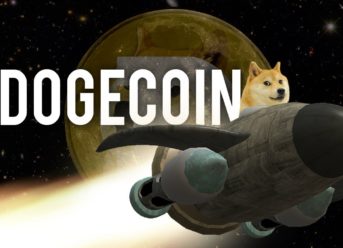
Dogecoin (DOGE) Surged Again And Is Now Ranking 17th In The Cryptocurrencies Market

Dogecoin began as a joke but has become in recent weeks a phenomenon in the cryptocurrencies market. Dogecoin (DOGE), the meme cryptocurrency, which emerged without an Initial Currency Offer (ICO) and a foundation to support it, has taken a relevant boost that helped it exceed 95% of the cryptos regarding daily trading volumes. Also, Dogecoin (DOGE) is now ranking 17th in the cryptocurrencies market.

According to the OnChainFx portal, Dogecoin (DOGE) maintained yesterday the second trading volume in the market, just behind Bitcoin (BTC). In this time, Dogecoin (DOGE) scored a trading volume of three times larger than Ethereum (ETH) and 20 times higher than Bitcoin Cash (BCH).

The value above refers to the volume of transactions as the sum of all operations belonging to the mined blocks on a given day, ignoring known outflows.

Dogecoin (DOGE) has experienced a 160% growth over the last month, which has caught the attention of every cryptocurrency enthusiast and analyst. The DOGE’s considerable increase was also debated by Canadian crypto expert Kevin Rooke, who stated that “Dogecoin may have started as a joke, but his community is now the envy of the cryptocurrency.”

Dogecoin (DOGE) is ranking 17th in the cryptocurrencies market

The recent surge of Dogecoin (DOGE) price and trading volumes boosted the cryptocurrency on the 17th position in the market, by market capitalization, surpassing more active cryptos such as Zcash (ZEC), VeChain (VET), NEM (XEM), or Tezos (XTZ).

At the time of writing, DOGE trades at $0.0064 and total market capitalization of $745,983,881.

Dogecoin (DOGE) was created by Jackson Palmer and Billy Markus and introduced in 2013 as a fork in the Litecoin (LTC) blockchain. Its logo shows a Shiba Inu dog, a breed famous because of the Internet meme “Doge.”

In January 2018, Dogecoin surpassed $1 billion in capitalization in the midst of the skyrocketing cryptocurrencies market. In June of this year, the Dogecoin (DOGE) community and the developers met in Vancouver, in Canada, to celebrate the creation of Dogecoin and discuss the present and future of the project. Apparently, their discussions paid off, at least for the moment.

Exit mobile version